A New Age of Science
Along with the industrialization of the age came a new found interest in science around the 1830s. Since science was viewed as a way in which one could make life easier for everyone, the general public seemed to begin to accept it in full. So, a boom of scientific discoveries mark the era. For example, the Frenchman Louis Pasteur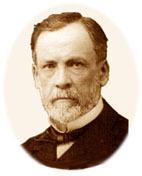 first formed his germ theory in this time period, setting the way for the future Cellular Theory as well as being crucial to modern scieintific medical practice. Along with Pasteur was a Russian by the name of Dmitri Mendeleev
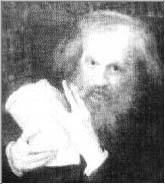 . In 1860, he classified known material elements based on their atomic weight. Finally, hailing from Britian, Michael Faraday
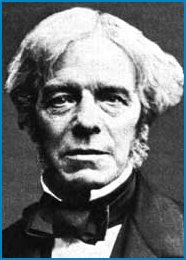 build the worlds first generator, laying the groundwork for the use of electricty. However, while all of these discoveries were well and good, they each presented a major problem. As science continued to explain nature, people were falling away from religion. This would soon prove to be a big problem when in 1859, Charles Darwin
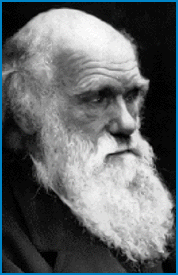 released his book 'On the Origin of Species by Means of Natural Selection'. In it, he describes the basic concepts behind evolution, as well as natural selection, claiming that all creatures derived from a single ancestor, and changed over the years so as to survive changes in their environment. This idea upset the Catholic Church a great deal, as it didn't provide much room for God. What Darwin said next, though, was even more earthshaking for the Church. In his next book 'The Descent of Man', published in 1871, he claimed that mankind itself had originated from a common ancestor. This idea suggest that man might not have been created in the image of God, and therefore upset the Church a great deal. However, science moved on, and advanced through the years, despite the attempts of the Church.
Home