Nationalism and Reform in Europe
There were other parts of the world undergoing change, too. Of these, one of the most important was Great Britian. Still going strong as a monarchy, in 1815 she was mostly ruled by aristocratic landowning classes. However, as civil unrest began to mount, Parliment began to brainstorm a way to keep everyone happy. So in 1832, more male voters were let in from the industrial middle class. That way, the middle class would have a larger say in government and they could avoid revolt. These types of reforms continued through 1850 and 1870, encouraging economic growth and increasing the wages of workers by 25 percent. Also of note was the reign of Queen Victorian, which lasted from 1837 to 1901, making it the longest single reign in the history of Britian. From then onwards, the time period has become known as the Victorian Era due to that fact.
Great Britian wasn't the only one changing, though. So was France. After being under the rule of the president, the country was ready for steps back towards monarchy. In 1848 the president Louis Napoleon asked to restore the empire, and 97 percent of the people voted yes. By December 2nd, 1952 Louis was crowned Emporer Napoleon III, and the Second Empire began.
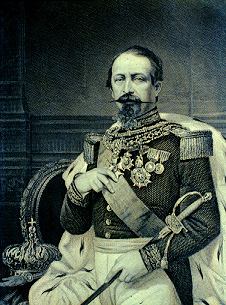 Napoleon III, now with supreme power over France, began to shape the country to his likings. He led the country through 5 good years, improving transportation, making iron production triple, and rebuilding Paris. People were getting a little tired of his complete control though, so in 1860 he gave more power to the Legislative Corps. From then on, things looked good for him. Especially in 1870, when his proposed constitution was passed. However, this victory didn't last long as soon after he was faced with the Prussian army, who defeated and captured him, successfully ending his reign.
Next in line is Austria. With constant defeat after defeat in other areas of the world, it was necessary for Austria to find an ally. They found this ally in Hungary. Together they formed the Ausgleich, or compromise, which meants that they would be run both by dual monarchs. Each part had its own constitution, legislation, government bureaucracy, and capital, while only 1 monarch ruled and they shared a common army, foreign policy, and system of finance. This meant that in terms of domestic affairs, Hungary was free. They wanted more, though.
Finally, the beaten Russia also changed during this time. After her defeat, she began to slowly fall behind other nations. Then, Tsar Alexander II took control. In March 3rd, 1861 he issued an emancipation edict which was supposte to make peasants free to own property and marry who they chose. It didn't work out that way though, as the government bought the land for peasants from land owners, and the owners never gave up the good portions, so the peasants were stuck with poor land. On top of that, they had to pay top dollar to the government in return for getting the land, and to ensure that they payed up they were forced to live in communes. After Alexander II is assassinated in 1881, his son Alexander III turns to reform to try and save these peasants.
Home