The Unification of Italy
With one of its largest allies out of the way, Austria was looking for support. Since it refused to aid Russia during the war, and since Russia was busy licking its own wounds anyways, Austria was left friendless. It was, however, still the dominante power in the peninsula of Italy. This gave the Italians a chance: since they would only have Austria against them, now would be the best time to try and gain independce. They saw this independce in the Northern Italian state of Piedmont. Piedmont was infact free, and ruled by the royal house of Savoy, but it wasn't the size of Austria and certainly couldn't take on the whole country at once. Things changed though, when King Victor Emmanuel II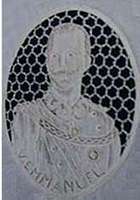 elected Count Camillo di Cavour as prime minister
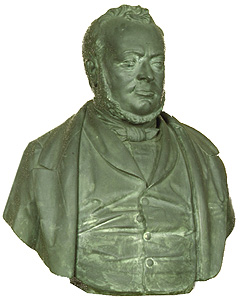 . Cavour quickly took control and expanded Piedmont, adopting a policy of economic expansion to increase government revenue. Then, with this new money, he trained a large army and made an alliance with the French Emporer Louis Napoleon. This building of an army and constant goading from Cavour eventually made Austria angry, and in 1859 she attacks Piedmont. While they make a showing, Cavour's men don't do as much as the French Army, who swiftly defeated the Austrians and took control. The French then gained Nice and Savoy, as per the agreement, and Lombardy is given to Piedmont. Soon after, the Italian states of Parma, Modena, and Tuscany rebel and later join Peidmont. Italy seems to be shaping up as quite the unified country, only the south is still under foreign control. This is to change as a new hero arises by the name of Giuseppe Garibaldi
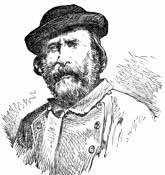 . He forms an army of 1,000 men known as the 'Red Shirts' and leads them to Sicily, where he convinces currently rebellion peoples to join him in an attack against the Bourbon King of the Two Sicilies. By the end of July 1860, most of the Scilies are under Garibaldi's control. In August he crossed the mainland and marches on the peninsula, sacking both Scilies and the city of Naples. In his success he is viewed as a great hero, but Peidmont begins to get nervous. Cavour sends his army to the south to prepare for invasion, but there he is met by Garibaldi, who turns over his troops and conquests to the newly unified state of Italy. However, two areas are still under foreign control:Venetia to the North, held by the Austrians, and Rome, held by the Pope and protected by the French Army. Luckily, the Austro-Prussia War begins in 1866, giving Peidmont a chance at joining Prussia as an ally against Austria. This proves profitable to the Italians, as they are defeated by the Austrians but with the aid of the Prussians, win the war and gain Venetia. With only Rome left, Peidmont joins in again with the Prussians in the Franco-Prussian Wars, and after removing the French force, takes and annexes Rome, making her the Italian capital. Italy is finally free and under her own rule.
Home